Advice
Appliance Not Working After a Power Outage? A Florida Storm Guide
Appliance not working after a power outage? Storm safety, USDA food rules, a step-by-step reset for breakers and GFCIs, and when surge damage needs a repair.
By Jax Appliance Pros · · 7 min read
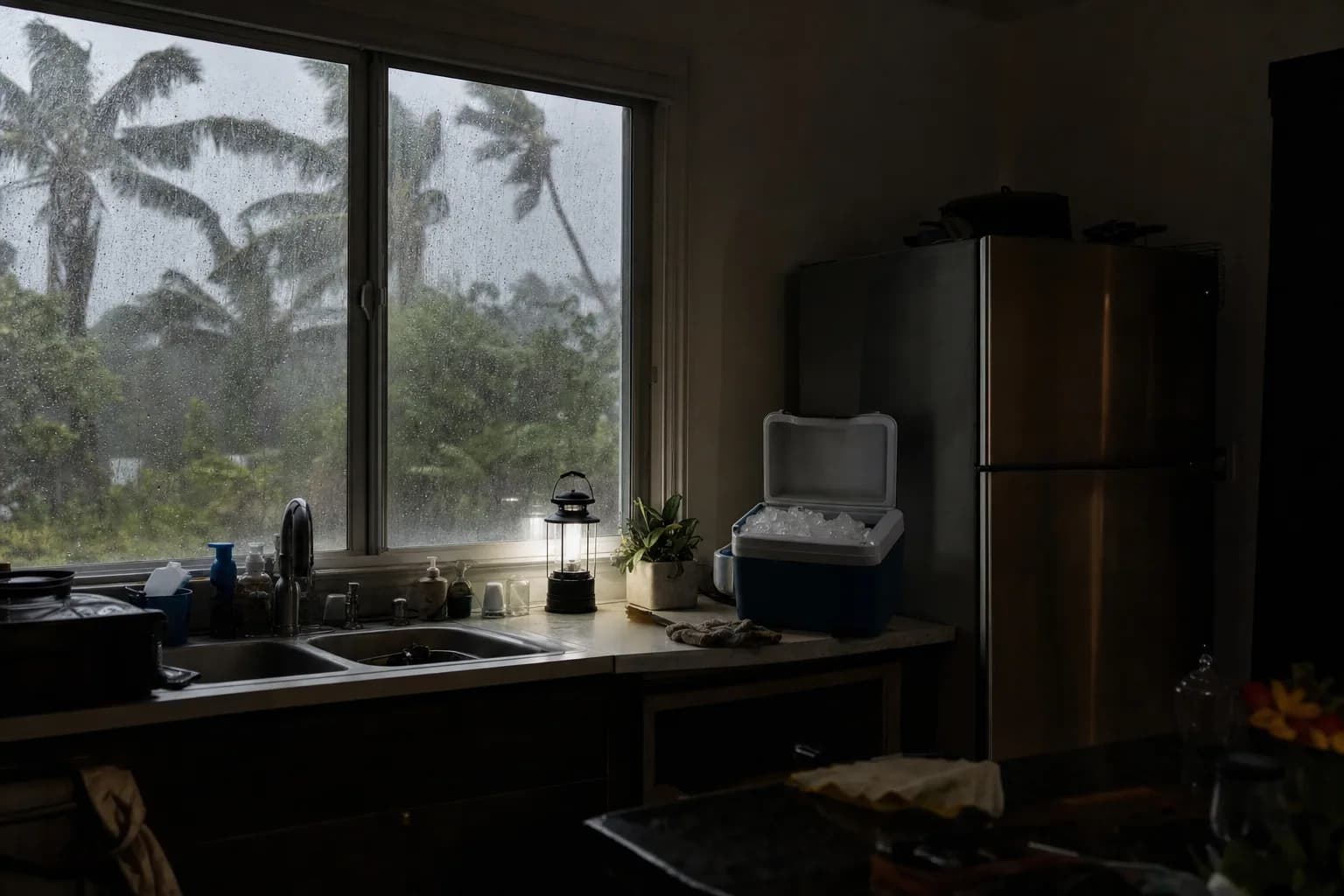
If an appliance is not working after a power outage, the cause is usually simple: a tripped breaker, a tripped GFCI outlet, or electronic controls that need a full power reset. Refrigerators also need time, because the compressor may not restart right away. If a reset does not bring an appliance back, a power surge may have damaged its control board, and that is a repair.
Storm season makes this a yearly routine on the First Coast. Start with safety.
Safety first after a storm
- Wet appliances stay off. The Consumer Product Safety Commission says not to touch wet appliances that are still plugged in. Keep everyone out of standing water near outlets, and if you cannot safely shut off the power, call an electrician or the utility.
- Flooded appliances need an inspection first. Before you use anything that was under water, CPSC says to have a qualified professional or utility representative inspect the home and replace any gas control valves, electrical wiring, circuit breakers and fuses that were under water. USDA is stricter about food storage: a refrigerator or freezer submerged by floodwater, even partially, is unsafe to use and must be discarded.
- Generators stay outside. CPSC says never to run a portable generator inside a home, garage, basement, crawlspace or shed, even with the doors or windows open. Run it outdoors, at least 20 feet from the house, with the exhaust pointed away from windows, doors and vents.
- Carbon monoxide alarms. Install battery-operated CO alarms, or alarms with battery backup, on every level and outside sleeping areas. If one sounds, get outside first, then call 911.
- Power appliances from the generator itself. Ready.gov says to connect appliances to a generator with heavy-duty extension cords. Never plug a generator into a wall outlet; CPSC warns that this practice, called backfeeding, can kill by electrocution or fire. Connecting a generator to your home's wiring is a job for a licensed electrician.
- If you smell gas, do not touch light switches or use a phone inside. Leave the house and call the gas utility or 911 from outside.
Protect your food first
According to the USDA, a closed refrigerator keeps food safe for up to 4 hours without power, and a full freezer holds its temperature for about 48 hours (24 hours if it is half full). Keep the doors shut, and if the outage runs longer, move perishables to a cooler with ice. To prepare for the next storm, USDA suggests keeping an appliance thermometer in each compartment, filling empty freezer space with frozen jugs of water, and having a cooler and frozen gel packs ready.
USDA says to discard perishables such as meat, poultry, fish, eggs, leftovers, milk and soft cheeses if the refrigerator was without power for more than 4 hours. Frozen food that still has ice crystals, or that stayed at 40°F or below, can be refrozen, though the quality may suffer. Never taste food to decide. When in doubt, throw it out.
What to do after a power outage, step by step
Unplug an appliance, or switch off its breaker, before you pull it out or remove any panel. Then work through these in order:
- Check the breaker panel. Look for any breaker that is off or sitting in the middle. Switch it fully off, then back on. If it trips again, leave it off; see refrigerator tripping the breaker or GFCI.
- Reset GFCI outlets. The outlets with Test and Reset buttons, found in kitchens, laundry rooms, garages and outdoors, may have tripped. Press Reset, and check nearby outlets too, because one GFCI can protect others on the same circuit. Never remove or bypass a GFCI.
- Power-cycle the appliance. Switch its breaker off, or unplug it, for one minute, then restore power. This clears controls confused by the outage. Whirlpool, for example, says some electric ranges show an F9 code after an outage and recommends this same reset.
- Reset the clocks. GE notes that ranges and ovens do not keep their settings through an outage. Set the clock, restart any interrupted cycle, and look for a control lock.
- Give the refrigerator time. After a short outage, GE says the compressor's overload may cycle on and off until the refrigerant system equalizes; then the compressor starts on its own, with no need to unplug it again. Frigidaire allows 24 hours for the temperature to stabilize.
- Check temperatures. Put an appliance thermometer in each compartment. USDA's targets are 40°F or below in the refrigerator and 0°F or below in the freezer.
- Call if it is still dead. A blank display, a breaker that keeps tripping or a refrigerator still warm the next day points to a failed part.
Refrigerator not cooling after a power outage
If the light is on but the refrigerator is still warm after several hours, repeat the one-minute reset. If it still is not cooling, a surge may have damaged the control board, the start relay or, on inverter models, the inverter board that drives the compressor. Our guide to why your fridge is not cooling covers the other causes.
Ice maker not working after an outage
Frigidaire notes that ice can melt and refreeze around the dispenser auger after a power outage. Remove the bin, thaw and empty it, clean and dry it, and put it back. If no new ice arrives within a day, see ice maker not making ice.
Washer not working after an outage
Samsung says a top-load washer that lost power mid-cycle can take up to 5 minutes to unlock and resume. A front-loader keeps its door locked while there is water inside. Samsung's fix is to drain it through the emergency drain hose next to the pump filter, with the washer unplugged and towels down, then power it back on; the door should unlock. If the washer shows no lights at all, see washer won't turn on.
Oven or range not working
A gas oven will not work during an outage either; GE explains that its igniter and gas valve need electricity. On electric ranges with knobs, turn the burners off so they do not come back on when the power returns. If the oven still will not respond, see oven not turning on.
Microwave not working
Reset the breaker and any GFCI; Frigidaire notes that power surges can trip the breaker and cause electronic control problems. On a generator, Whirlpool says a microwave may get enough power for its lights and controls but not enough to heat. Never open the cabinet, even unplugged. More in microwave stopped working.
Dishwasher won't start
Check the breaker, a GFCI that may be up on the counter, and the wall switch, which is easy to confuse with the disposal switch. Then do the one-minute reset. See dishwasher won't start for control locks and latches.
Power surge damage
Ready.gov warns that power may return with momentary surges or spikes that can cause damage, and recommends turning off or disconnecting appliances and electronics during an outage. A power surge usually hits the electronics: control boards, display boards and inverter boards. The signs are a dead display, controls that do nothing, or a code that returns after every reset. These are repairable, and we test before replacing a board. For next time, a whole-house surge protector at the panel, installed by a licensed electrician, is the best defense, as our Florida maintenance checklist explains.
What it costs in Jacksonville
The diagnostic is $79 on standard appliances and $119 on built-in refrigerators, wall ovens and microwave-oven combos, and it is waived when you approve the repair. Repairs start at $179 plus parts on standard appliances and $249 plus parts on built-in ovens and combos, with a written flat-rate estimate before any work begins. Many repairs can be finished on the first visit, and every repair carries our 90-day parts-and-labor warranty. See our pricing.
Schedule refrigerator repair or call (904) 561-4790. Refrigerators that are not cooling get priority scheduling, and most calls placed before noon get same-day service across Jacksonville & the First Coast.
About Jax Appliance Pros
Locally owned appliance repair for Jacksonville, the Beaches, St. Johns, Clay and Nassau counties. Same-day or next-day service on refrigerators, washers, dryers, dishwashers, ovens, cooktops, ranges and garbage disposals. $79 diagnostic waived with the repair, 90-day parts-and-labor warranty. Insured. More about us.