Microwaves
Microwave Stopped Working? No Power, Won't Start or Trips the Breaker
Microwave stopped working, won't start or trips the breaker? Safe power and door checks, why a blown fuse always has a cause, and repair costs in Jacksonville.
By Jax Appliance Pros · · 7 min read
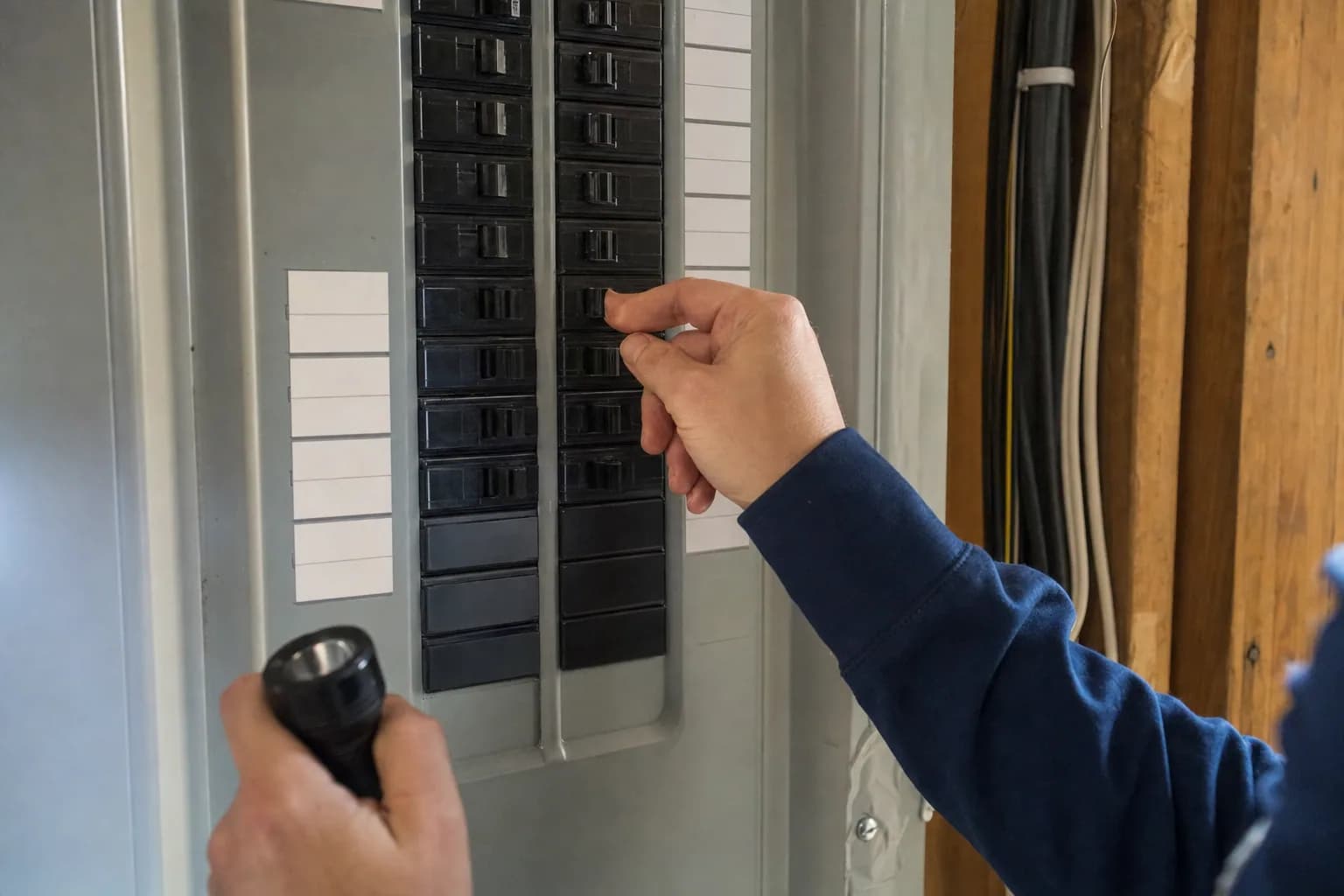
Microwave stopped working? Whether it has gone dark, will not start or trips the breaker, start with the power supply. A tripped breaker, a GFCI outlet or a locked keypad can all make a microwave look dead, and each takes minutes to check. If the power checks out, the usual culprit is a blown internal fuse, and a fuse rarely blows on its own. Finding what blew it is a job for a technician.
If it runs but the food stays cold, see microwave not heating instead.
Safety first: never open the cabinet
Never open the microwave's cabinet or remove its cover, not even to replace a fuse. The high-voltage capacitor inside can hold a dangerous, potentially lethal charge even after the microwave is unplugged. GE Appliances warns about that capacitor and gives no do-it-yourself microwave repair advice, and the Consumer Product Safety Commission warns against do-it-yourself microwave repair, noting that the shock hazard remains even after the oven is disconnected.
The FDA, which regulates microwave ovens, also says to stop using a microwave that keeps running with the door open, and not to use one whose door does not close firmly or is bent, warped or otherwise damaged.
Checks you can do yourself
- Test the outlet. Plug a lamp into the same outlet. If it works, plug the microwave straight into the wall; LG advises against extension cords and surge strips.
- Check the breaker. Find the microwave's breaker and switch it fully off, then back on. GE says an over-the-range microwave should always be on a dedicated circuit, so look for its own breaker, not the one for the counter outlets.
- Reset any GFCI. If the microwave plugs into an outlet with Test and Reset buttons, press Reset. A GFCI elsewhere on the same circuit can cut power too, so check nearby outlets.
- Look at the display. If the display is on but the keypad starts nothing, the control lock may be on. GE microwaves show LOCK or a small L, and holding Clear/Off (or Pause/Off) for about three seconds unlocks most of them; Whirlpool shows LOC or L. Other brands differ, so check your manual. A blank display is not always a dead microwave, either: some GE models have a display-off or power-saver setting that hides the clock.
- Open and close the door firmly. A microwave will not start unless the door is fully latched. Some Whirlpool models also refuse to start if the door has been closed for five minutes without a cycle; they show a message, and opening and closing the door clears it.
- Let it cool. If it shut off partway through cooking, it may have overheated. GE lists long cooking times and blocked vents as causes: clear the vents, wait about 30 minutes and try again.
- Reset the power. Switch off the breaker, or unplug the microwave, for one minute, then restore power.
If the outlet has power and the microwave is still dead, the problem is inside the cabinet.
Microwave has no power or will not turn on
No display, no light when you open the door, no beep. Once the outlet, breaker and GFCI check out, the usual causes are a blown internal fuse (a ceramic line fuse), a thermal cutout that has opened and stayed open, or, less often, a failed control board.
Microwave stopped working suddenly
A microwave that quits in the middle of a cycle has either protected itself or blown a fuse. If it overheated, a thermal cutout shuts it down. Some microwaves come back once they cool; in others the cutout is a one-time part that must be replaced. If it stays dead, the fuse has probably blown, and something made it blow: a worn door switch, or a failing high-voltage part such as the magnetron, which KitchenAid notes can blow a fuse.
Stopped working after a power outage
Storms, outages and surges are part of life on the First Coast. If the microwave stays dark after the power returns, reset its breaker and any GFCI (Frigidaire suggests resetting the breaker after a surge), then switch it off for one minute and back on. If it is still dead, the surge may have damaged the control board or blown the internal fuse. Both are repairable.
For next time, a whole-house surge protector at the panel is the best defense, as our Florida maintenance checklist explains. Just do not plug the microwave into a surge strip.
Microwave tripping the circuit breaker
GE says a microwave is not expected to trip the breaker. Make sure it has a circuit to itself; Panasonic says no other appliance should share it, and that tripping usually comes from a shared circuit or an aging, overly sensitive breaker. Reset the breaker once and try again. If it trips a second time, GE says to unplug the microwave and call for service.
A breaker that trips the instant the microwave starts heating, or when the door opens or closes, points to a fault inside, such as a shorted high-voltage part or a door switch problem. A worn breaker that trips too easily is a job for an electrician.
Microwave stopped working after opening the door
Federal rules require every microwave to have at least two door safety interlocks, plus a monitoring system that makes the oven inoperable, and keeps it that way until it is repaired, if an interlock fails (21 CFR 1030.10). In many microwaves that monitoring is done by a switch that deliberately blows the internal fuse. So when a microwave dies the moment you open the door, a worn door switch or latch has usually failed, and the fuse did its job.
Whirlpool lists other signs of a bad door switch: the interior light stays on with the door closed, or does not come on when the door opens. And if a microwave ever keeps running with the door open, unplug it and stop using it.
Why a blown fuse is not the whole fix
A fuse blows because something made it blow: a failing door switch, a shorted magnetron, capacitor, diode or transformer, or a surge. Put in a new fuse without fixing that cause and it will blow again, or worse, the microwave may run with a safety switch that no longer works. Sharp's service manual tells technicians to test every door switch before replacing a blown monitor fuse. The fuse also sits inside the cabinet next to the high-voltage capacitor, which is why even a "simple fuse replacement" is not a DIY job. Our technicians discharge the capacitor, test the switches and high-voltage parts, and replace the fuse along with the part that blew it.
What usually fails
- Ceramic line fuse. A completely dead microwave, and it always has a cause.
- Door interlock switches and the latch. It stops after the door is opened, will not start, or the interior light misbehaves.
- Thermal cutouts. It shuts off mid-cycle. Some reset after cooling and some are one-time parts; either way, a tripped cutout usually means blocked vents or a failing cooling fan.
- Control board. A dead display or a keypad that does nothing, often after a surge.
- Magnetron, capacitor, diode or transformer. High-voltage failures that can take the fuse with them.
What it costs in Jacksonville
We repair over-the-range and built-in microwaves. The diagnostic is 79, or 119 for a microwave-oven combo, and it is waived when you approve the repair. Repairs start at 179 plus parts for over-the-range and built-in microwaves and 249 plus parts for oven-microwave combos, with a written flat-rate estimate before any work begins. We carry common parts on the van, so most repairs are done on the first visit; if a part must be ordered, there is no trip charge to come back. Every repair carries our 90-day parts-and-labor warranty. See our pricing.
Repair or replace?
A countertop microwave is usually cheaper to replace than to repair, and we will tell you so. Over-the-range and built-in microwaves are usually worth repairing: they cost more, and a replacement has to be mounted or fitted into your cabinets. Replacing an over-the-range unit anyway? We can install the new one. For the math, see our repair-or-replace guide.
Book microwave repair or call (904) 561-4790 for same-day service across Jacksonville & the First Coast.
About Jax Appliance Pros
Locally owned appliance repair for Jacksonville, the Beaches, St. Johns, Clay and Nassau counties. Same-day or next-day service on refrigerators, washers, dryers, dishwashers, ovens, cooktops, ranges and garbage disposals. $79 diagnostic waived with the repair, 90-day parts-and-labor warranty, licensed and insured. More about us.