Refrigerators
Why Is My Fridge Making Noise? Buzzing, Clicking and Loud Hums
Fridge making noise: buzzing, clicking, grinding, or just louder than it used to be? Which sounds are normal, which mean a failing part, and repair costs.
By Jax Appliance Pros · · 7 min read
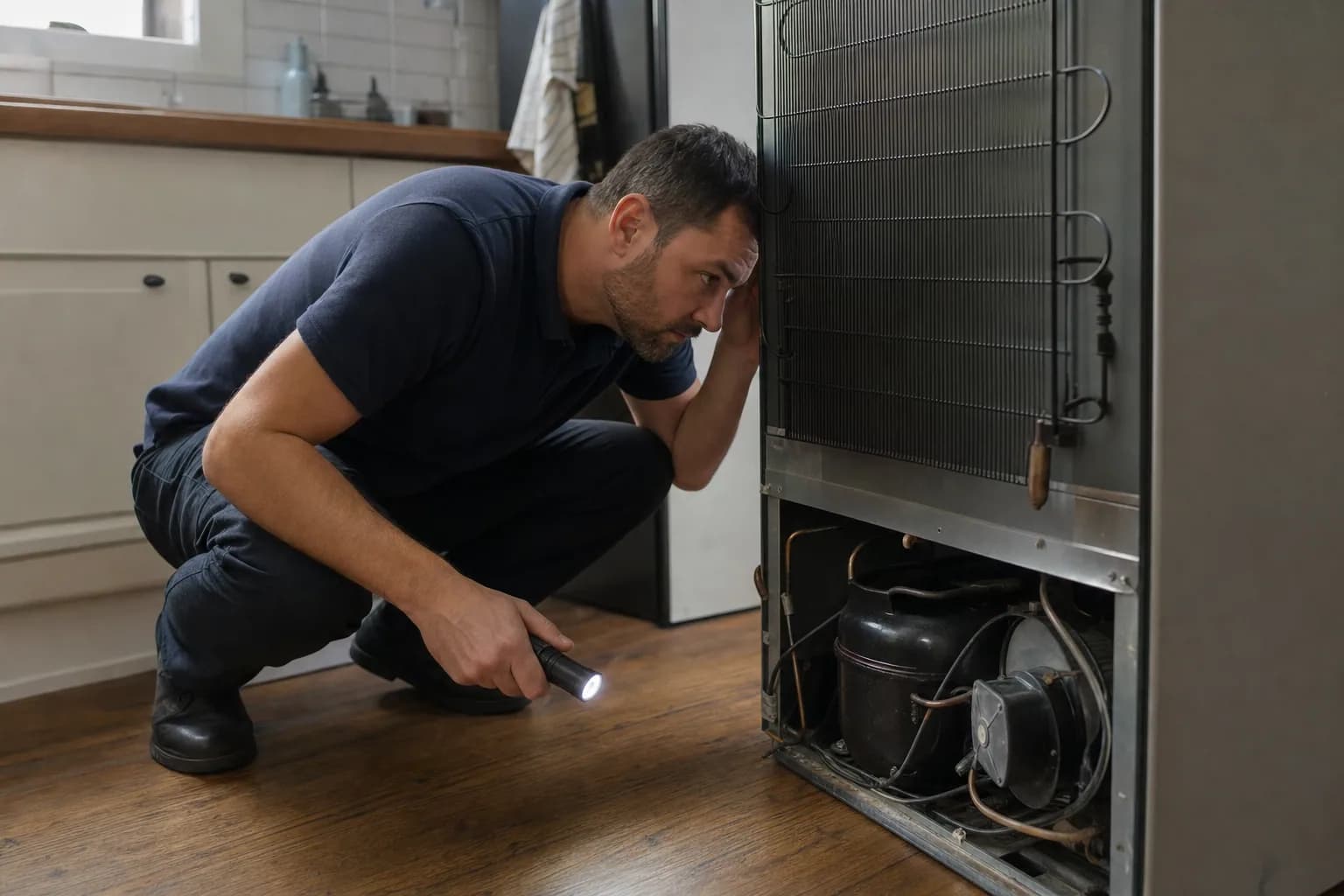
If your fridge is making noise, the odds are good that it is normal: the ice maker filling, water sizzling on the defrost heater, the cabinet popping as it cools and the steady hum of the compressor. A new sound that is loud, grinding or rhythmic usually comes from a fan, and fans are among the simpler refrigerator repairs. The one sound to take seriously right away is a click followed by silence, because it often means the refrigerator is about to stop cooling.
Unplug the refrigerator before you remove the kick plate or the rear access panel. The fans behind them can start at any time while it has power.
Normal refrigerator sounds
Manufacturers list all of these as normal:
- A buzz or hum for a few seconds when the ice maker fills, as the water valve opens.
- Cracking or a clatter as cubes release from the ice maker and drop into the bin.
- Sizzling or hissing during defrost, from water dripping onto the defrost heater.
- Popping or cracking from the inside walls contracting and expanding, especially when the refrigerator is new or coming out of defrost.
- Gurgling or hissing from refrigerant flowing through the tubing, and from defrost water running to the drain pan.
- A steady hum from the compressor and fans. Whirlpool notes that newer high-efficiency compressors run longer than older ones, and Samsung notes that its compressors can change speeds as they run.
- Clicks from relays and the control switching parts on and off. GE adds that some models chirp as the damper opens and closes.
- A brief rattle when the compressor shuts off. Samsung describes it as lasting under 10 seconds and very quiet.
Checks you can do yourself
- Find where the noise comes from: inside the freezer, the bottom back, or the ice maker. Then open the freezer door while the noise is happening. On many models the freezer fan stops when the door opens, so a noise that stops with it points to the evaporator fan.
- Level it. Whirlpool traces a vibrating sound to a refrigerator that is not steady. Remove the base grille and adjust the leveling screws or legs until it sits firmly on the floor.
- Clear the top and the back. Samsung suggests moving the refrigerator out an inch to see whether something behind it is rattling, and items stored on top can vibrate too.
- Turn off the ice maker if there is no water line. Whirlpool and GE both note that an ice maker left on without a water supply makes the valve buzz as it tries to fill.
- Clean the condenser coils. Unplug the refrigerator first. Whirlpool notes that dirty coils can make a unit run louder and more often.
- Look at the back wall of the freezer. Thick frost or ice there points to a defrost problem, which is also what lets a fan blade hit ice.
Refrigerator buzzing sound
A buzz every so often with no ice being made is almost always the ice maker valve trying to fill without water; turn the water on or the ice maker off. A steady, loud buzz from the bottom back points to the compressor or the condenser fan motor. Whirlpool also notes that a refrigerator that is not level can pass vibration into the cabinets or the floor, where it sounds like buzzing. A buzz or hum inside the freezer that changes when you open the door is the evaporator fan.
Why is my fridge so loud?
If the whole refrigerator has gotten louder, start with checks 2, 3 and 5. A refrigerator that runs long and hard because its coils are matted with dust, the room is hot or a door gasket leaks sounds louder simply because it rarely stops. If it still sounds wrong after that, the sounds below will narrow it down.
Refrigerator making noise: abnormal sounds and what they mean
Grinding, scraping or ticking in the freezer
This is the evaporator fan blade hitting ice. Samsung describes a noise caused by ice buildup around the fan that stops when the door is opened. Ice around the fan is a symptom: a defrost problem, a door left ajar or a leaking gasket let the frost build. A manual defrost (food out, unplugged, doors open, towels down until they stay dry or about 24 hours pass) quiets it for a while, but Samsung is clear that only service corrects the cause, and it warns never to use a hair dryer or other heat source to speed things up.
A squeal or whine that comes and goes
A worn evaporator fan motor bearing usually starts as a faint whine that grows over weeks. Whirlpool notes that a faulty evaporator fan can make the freezer loudly click, buzz or hum, and that the freezer typically also struggles to stay cold. If the fan stops completely, see refrigerator not cooling but freezer works and freezer not freezing.
Flapping or ticking from underneath
GE describes a noise from underneath like a card hitting bicycle spokes, caused by something hitting the condenser fan blade. Unplug the refrigerator, remove the kick plate and look; a stray piece of paper or packing material is an easy fix. If the blade is hitting part of the refrigerator itself, such as a rubber air divider, GE says that needs service. A condenser fan motor with worn bearings squeals or rattles instead, and needs replacing.
A click, then silence
If you hear a click from the bottom back every few minutes and the compressor never settles into its hum, the compressor is trying to start and failing. The usual cause is the start relay or overload, an inexpensive part. Do not wait on this one; the refrigerator will warm up. Our guide to a fridge that is not cooling explains how to protect your food in the meantime.
A loud hum, knock or rattle from the compressor
A compressor that is louder than it used to be may simply have a loose mounting or a tube touching the cabinet, both easy to fix. A heavy knock when it starts or stops, or a loud, labored hum, can mean the compressor itself is wearing out. We test it before recommending anything, because many noisy compressors turn out to be something smaller.
Ice maker noises
Grinding while you dispense ice is the motor pushing ice forward, which Samsung lists as normal. Grinding or clicking when nobody is using the dispenser, or an ice maker that tries to cycle over and over without making ice, points to the ice maker or its water supply; see ice maker not making ice.
A rattle from the drain pan
The drain pan sits under the refrigerator, and on many models near the compressor. If it has been bumped out of position during cleaning or a move, it can rattle against the frame whenever the compressor runs. Reseating it is usually a quick fix. A drain pan that is overflowing is a different problem, covered in why is my fridge leaking water.
What usually fails
- Evaporator fan motor. Squeal, whine or grinding inside the freezer, often with a freezer that is warming.
- Defrost parts. A fan that hits ice again soon after a manual defrost.
- Condenser fan motor. A squeal or rattle from the bottom back.
- Start relay or overload. A click, then silence.
- Water inlet valve or ice maker. Buzzing or grinding tied to ice making.
- Compressor. The least common cause, and always confirmed with tests.
What it costs in Jacksonville
The diagnostic visit is 79 (119 for built-in refrigerators), and it is waived when you approve the repair. Repairs start at 179 labor plus parts, quoted in writing before any work begins. Fan motors and relays sit at the lower end; compressor work costs the most, and if it comes to that, you get the full price and an honest opinion from our repair-or-replace guide before anything is done. We carry common parts on the van, so most repairs are finished on the first visit, and every repair carries our 90-day parts-and-labor warranty. See our pricing.
Schedule refrigerator repair or call (904) 561-4790 for same-day service across Jacksonville & the First Coast.
About Jax Appliance Pros
Locally owned appliance repair for Jacksonville, the Beaches, St. Johns, Clay and Nassau counties. Same-day or next-day service on refrigerators, washers, dryers, dishwashers, ovens, cooktops, ranges and garbage disposals. $79 diagnostic waived with the repair, 90-day parts-and-labor warranty, licensed and insured. More about us.