Refrigerators
Why Is My Fridge Freezing Everything? Causes and Fixes
Fridge freezing everything, from milk to lettuce? The right temperature, the checks to try first, the parts behind it when settings are fine, and repair costs.
By Jax Appliance Pros · · 5 min read
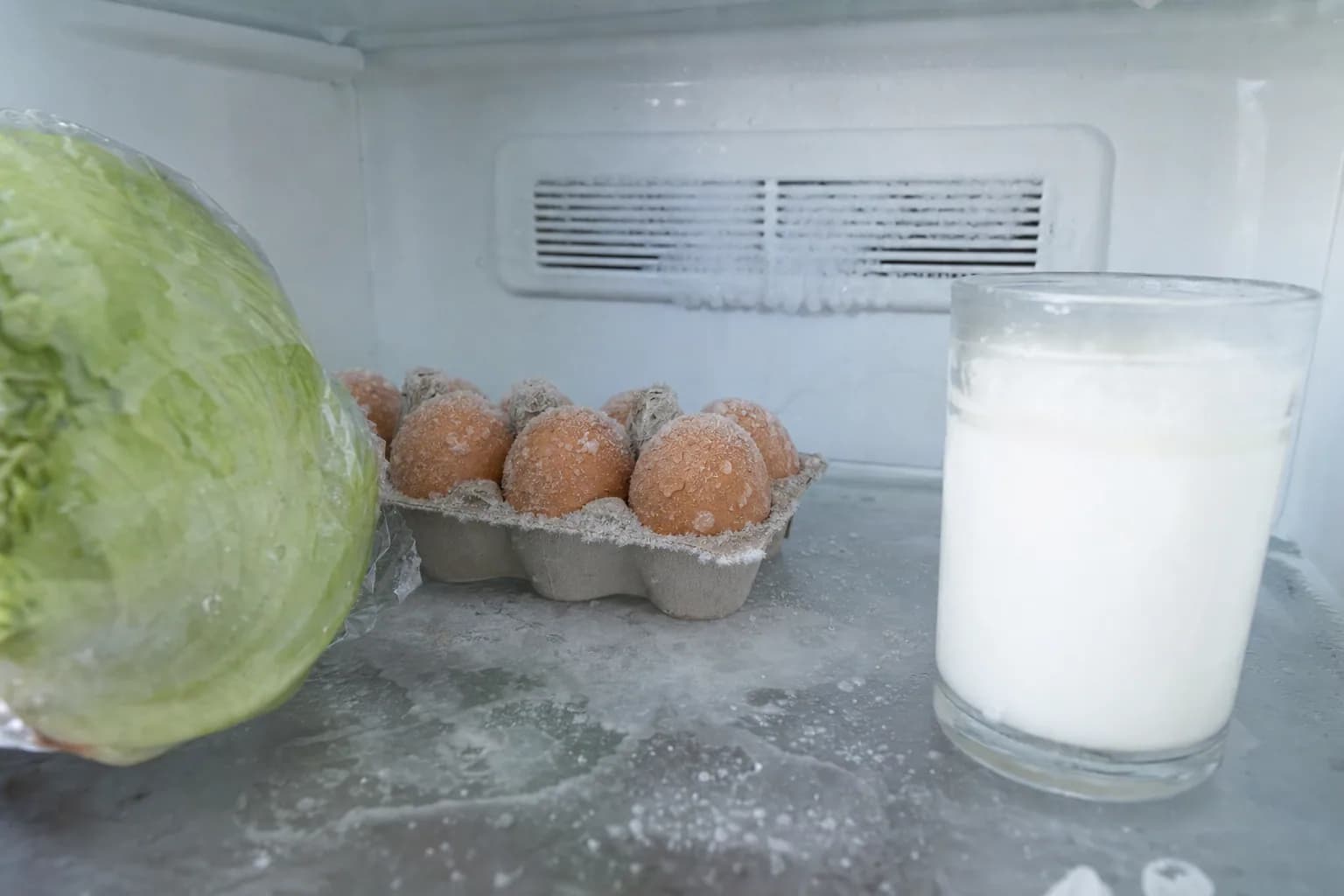
A fridge freezing everything, from lettuce to milk and eggs, is usually too cold because of its setting, or because food is blocking the vents that bring cold air in from the freezer. Both are free to fix. If food keeps freezing after you have ruled those out, a part is letting in too much cold air, usually a damper stuck open, a temperature sensor (thermistor) that reads wrong, or the control.
What temperature should a fridge be?
The FDA says to keep the refrigerator at or below 40°F and the freezer at 0°F, and recommends an appliance thermometer to check. Whirlpool puts the ideal fresh-food temperature at about 37°F and notes that at or below 34°F, food in the fresh-food section can start to freeze. So the target is a narrow band: at or under 40°F for safety, but out of the low 30s. Around 37°F is the sweet spot.
Checks you can do yourself
- Measure the real temperature. Put an appliance thermometer on a middle shelf, or use Whirlpool's method: leave a glass of water on the top shelf for 24 hours, then check it with a cooking thermometer. If it is more than 2 degrees off the set temperature, the sensor may be faulty.
- Check the setting. Displays and dials get bumped during cleaning. Set the fridge to 37°F, or to the middle setting on a dial; the numbers on a dial are not degrees, and your owner's manual explains the scale. Whirlpool recommends waiting at least 24 hours between adjustments.
- Clear the vents. Cold air enters the fresh-food section through vents, usually on the back wall. Samsung recommends keeping food 2 inches clear of them, and Whirlpool warns that eggs and liquids placed directly in the airflow may freeze.
- Uncover the temperature sensor. LG notes that food blocking the temperature sensor, usually inside the top of the fridge compartment, can make the refrigerator overcool and freeze food.
- Turn off the ice maker if you have no water line. Whirlpool notes that an ice maker left on without water keeps trying to make ice, which can make the fresh-food section too cold. Our ice maker guide covers how to switch it off.
- Check the drawer settings. Some crisper and deli drawers have their own temperature control. LG's Meat/Fish setting, for example, runs colder than its other modes and can freeze foods with a lot of water in them.
- Check the door gaskets. Whirlpool lists a leaking door seal among the causes of a fridge that freezes food. Clean the gaskets and look for tears.
Why is my fridge freezing food in the back?
That is the vents at work. LG notes that the back of the top shelf, right beside the cold-air vent, can get close to freezing. If only the food at the back freezes, keep it a few inches off the vent, and follow LG's advice to move fruit, vegetables and other items that freeze easily to the lower shelves or the crisper drawers.
Freezing everything even on the warmest setting
If you have turned the control all the way to its warmest setting and food still freezes, it is no longer a settings problem. The usual causes:
- A damper stuck open. The damper is a small door, motorized on many models, that meters freezer air into the fridge. Stuck open, it keeps pouring in cold air no matter what the setting says. The opposite failure, a damper stuck closed, causes the problem in refrigerator not cooling but freezer works.
- A thermistor that reads wrong. If the sensor tells the control the fridge is warmer than it really is, the control keeps sending cold air. The glass-of-water test in check 1 is a good clue.
- The control board. Less common. We test the damper and the sensor first and confirm a board has actually failed before replacing it.
A fridge in the garage
Plenty of homes in Jacksonville keep a second refrigerator in the garage. Whirlpool rates its standard refrigerators for rooms between 55°F and 110°F, and says very cold rooms such as garages change how the refrigerator cycles. When that happens, food can freeze in the fridge section, or on other models the freezer is the side that warms up and starts to thaw. Garage-ready models have a setting for cold weather; check your manual. An uninsulated garage can drop below 55°F on a January night, so a garage fridge that freezes food only in winter is usually telling you about the garage, not a failed part. Summer is hard on garage refrigerators too, as our Florida humidity maintenance guide explains.
An overfilled or nearly empty fridge
How full the refrigerator is matters more than most people expect. A nearly empty fridge has little food to hold the cold; Samsung recommends keeping it at least two-thirds full, and GE suggests at least half full on its bottom-freezer models. An overpacked fridge causes the opposite problem: food ends up pressed against the vents and the sensor, exactly where it freezes. Aim for full, with room for air to move around each shelf.
What usually fails
- Damper or air control. Freezing that continues on the warmest setting, worst near the vent.
- Thermistor. Thermometer readings that do not match the setting.
- Control board. Erratic temperatures after the damper and sensor test good.
- Door gasket. A torn or hardened seal that keeps the system running longer than it should.
If your freezer is the side that is losing its cold, see freezer not freezing instead.
What it costs in Jacksonville
The diagnostic visit is 79 (119 for built-in refrigerators), and it is waived when you approve the repair. Repairs start at 179 labor plus parts, and you get a written flat-rate estimate before any work begins. Dampers, thermistors and gaskets are moderately priced parts; control boards cost more, which is why we test the cheaper parts first. We carry common parts on the van, so most repairs are finished on the first visit, and every repair carries our 90-day parts-and-labor warranty. See our pricing.
Repair or replace?
A refrigerator that freezes food almost always needs an inexpensive part, not a new refrigerator. If yours is older and has had several problems, our repair-or-replace guide lays out when replacement makes sense.
Schedule refrigerator repair or call (904) 561-4790 for same-day service across Jacksonville & the First Coast.
About Jax Appliance Pros
Locally owned appliance repair for Jacksonville, the Beaches, St. Johns, Clay and Nassau counties. Same-day or next-day service on refrigerators, washers, dryers, dishwashers, ovens, cooktops, ranges and garbage disposals. $79 diagnostic waived with the repair, 90-day parts-and-labor warranty, licensed and insured. More about us.