Refrigerators
Fridge Smells Bad? From Spoiled Food to a Burning Smell
Fridge smells bad? Find the source, from spoiled food and the drain pan to old ice, clean it the safe way, and know when a burning smell means call for help.
By Jax Appliance Pros · · 7 min read
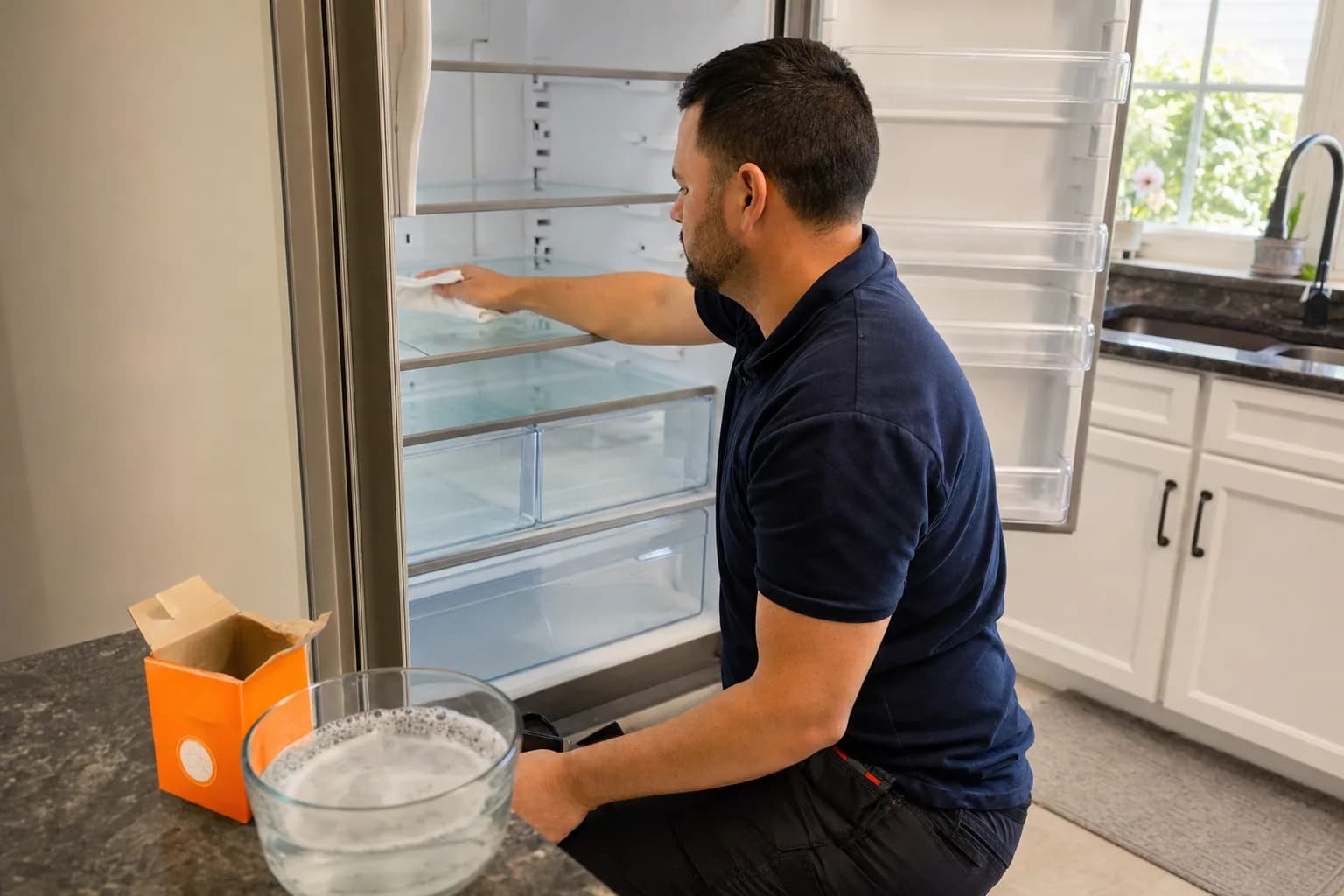
When a fridge smells bad, the cause is almost always food: something spoiled, spilled or stored uncovered, often out of sight in a crisper drawer, under a shelf or in the ice bin. A thorough cleaning fixes those, and USDA and the manufacturers agree on how to do it safely. A few smells are different: a burning or electrical smell, or a sharp chemical smell that does not come from food or new plastic, can mean a part is failing.
If you smell burning, unplug the refrigerator or switch off its breaker, if you can do it safely, and call for service. Do not plug it back in to see whether the smell returns. If you see smoke or flames, get everyone out and call 911.
Fridge smells bad? Checks you can do yourself
- Find where the smell is strongest: the fresh-food section, the freezer, the ice bin, or down at floor level.
- Empty it and throw out anything questionable. USDA suggests making a weekly habit of throwing out perishables that should no longer be eaten. Its rule of thumb is about 4 days for cooked leftovers and 1 to 2 days for raw poultry and ground meat.
- Pull the crisper drawers and shelves. Wash them in warm water with a mild detergent, and check the floor of the fridge under the drawers for liquid.
- Wash the inside, gaskets included. GE recommends 1 tablespoon of baking soda in 1 quart of warm water for the walls and shelves. USDA says to scrub the gaskets, shelves, sides and door, then leave the door open for about 15 minutes to air out.
- Dump the ice and let the ice maker start fresh.
- Check the drain pan under the refrigerator, as described below.
- Deodorize. USDA suggests an opened box of baking soda on a shelf; Whirlpool and GE suggest one box in the fridge and one in the freezer.
What to clean with, and what to avoid
Warm water with baking soda or a mild detergent is the safe choice. USDA warns against solvent cleaners, abrasives and any cleanser that could give food or ice cubes a chemical taste or damage the interior finish. GE adds no bleach or ammonia, which can crack the interior liner, and no lemon-scented cleaners, because the lemon odor may be absorbed permanently. For stubborn smells, Whirlpool suggests washing removable parts in equal parts vinegar and warm water, and USDA notes that vinegar's acid destroys mildew.
USDA's procedure for a badly spoiled refrigerator includes a dilute bleach rinse, while GE and Whirlpool both say not to use bleach, so check your owner's manual before any bleach touches the liner.
Crisper drawers and spills
Whirlpool lists the usual suspects: forgotten produce, drips from meat or sauces, and strong foods such as onions, garlic, fish and some cheeses. Keep food wrapped or covered and wipe spills right away; Whirlpool suggests cleaning both sections about once a month. If you keep finding water under the crisper drawers, that is usually a clogged defrost drain, and the standing water will keep souring. See why is my fridge leaking water.
Drain pan smell under the fridge
A frost-free refrigerator sends its defrost water down a tube to a drain pan underneath, where it evaporates. Anything that washes down with it can sit in the pan and grow mold, and that smell comes out at floor level. Unplug the refrigerator, remove the kick plate and look with a flashlight. Whirlpool suggests removing the drip pan and washing it with warm water and dish soap, then rinsing and drying it. On many models the pan is fixed or reached only from the back; GE says the pan on its refrigerators built since 1987 cannot be removed. Do not force it. A cracked or overflowing pan is a repair.
Ice that smells or tastes bad
Ice picks up odors. Whirlpool notes that improperly stored, rotten or strong-smelling foods such as fish or coffee can leach into the ice and water; throw the ice out and allow 24 hours for a fresh batch. If new ice still tastes off, replace the water filter, which Whirlpool recommends every 6 months. Whirlpool also traces off-flavored ice to new plastic plumbing connections, and to softened water, whose added salt can give ice a salty or chemical taste. Our ice maker guide covers the ice maker itself.
Freezer smells
A freezer that smells usually has food that was not sealed, old ice, or food that thawed and spoiled, often during a power outage. Here is USDA's odor procedure, minus the bleach rinse discussed above:
- Throw out any spoiled or questionable food.
- Wash the shelves, bins and ice trays in hot water and detergent. Wash the interior, door and gasket with hot water and baking soda, then leave the door open for about 15 minutes.
- If the smell remains, wipe the inside with equal parts vinegar and water and let it air out for several days, or fill it with rolled newspapers for several days, then clean again with vinegar and water.
- Set out fresh coffee grounds or baking soda in a shallow container, or a cotton swab soaked with vanilla, close the door for 24 hours, and check.
USDA says these steps may have to be repeated, and that a unit that cannot be deodorized may need to be discarded, with the door taken off first so a child cannot get trapped. The full guide is on USDA's website. To get a refrigerator running again after a storm, see appliances not working after a power outage, and if the freezer itself is warm, see freezer not freezing.
New fridge smell
GE notes that a new refrigerator often has a plastic odor, because most of the parts inside are plastic, and that the odor fades with time. Washing the inside with the baking soda solution above before you load it is a sensible first step.
Fridge smells like chemicals
A chemical smell usually has an everyday source: new plastic, a cleaner that was not rinsed off, a new plastic water connection or softened water feeding the ice maker. A strong chemical smell that does not fade after cleaning, especially one coming from the back or bottom of the refrigerator, is not something to diagnose by nose. Air out the kitchen, unplug the refrigerator and have it checked. If a technician finds a refrigerant leak, that is sealed-system work, which must be done by an EPA-certified technician.
Fridge smells like burning
A burning, hot-plastic or electrical smell is never normal. It can come from an overheating compressor, a fan motor, the start relay, the defrost heater or a wiring connection, most of which sit at the bottom back of the refrigerator. Unplug it, keep it off and call. If the outlet or the plug looks scorched, have a licensed electrician check the outlet too.
What usually fails
When cleaning does not solve it, the cause is usually one of these:
- Clogged defrost drain. Water under the crisper drawers and a sour smell that keeps returning.
- Drain pan. A cracked, overflowing or moldy pan and a smell at floor level.
- Door gasket. A torn or hardened gasket that traps spills and will not come clean.
- Water filter. Ice and water that still taste off after the old ice is gone.
- Electrical parts. A burning smell from the compressor, start relay, fan motor, defrost heater or wiring.
What it costs in Jacksonville
The diagnostic visit is $79 ($119 for built-in or integrated refrigerators), and it is waived when you approve the repair. Repairs start at $179 labor plus parts, and you get a written flat-rate estimate before any work begins. Most refrigerator repairs on standard brands run $200 to $450 all in; defrost parts, fans and relays sit at the low end, and premium brands run higher. Many repairs can be finished on the first visit. Every repair carries our 90-day parts-and-labor warranty. See our pricing.
Schedule refrigerator repair or call (904) 561-4790 for same-day service across Jacksonville & the First Coast.
About Jax Appliance Pros
Locally owned appliance repair for Jacksonville, the Beaches, St. Johns, Clay and Nassau counties. Same-day or next-day service on refrigerators, washers, dryers, dishwashers, ovens, cooktops, ranges and garbage disposals. $79 diagnostic waived with the repair, 90-day parts-and-labor warranty. Insured. More about us.